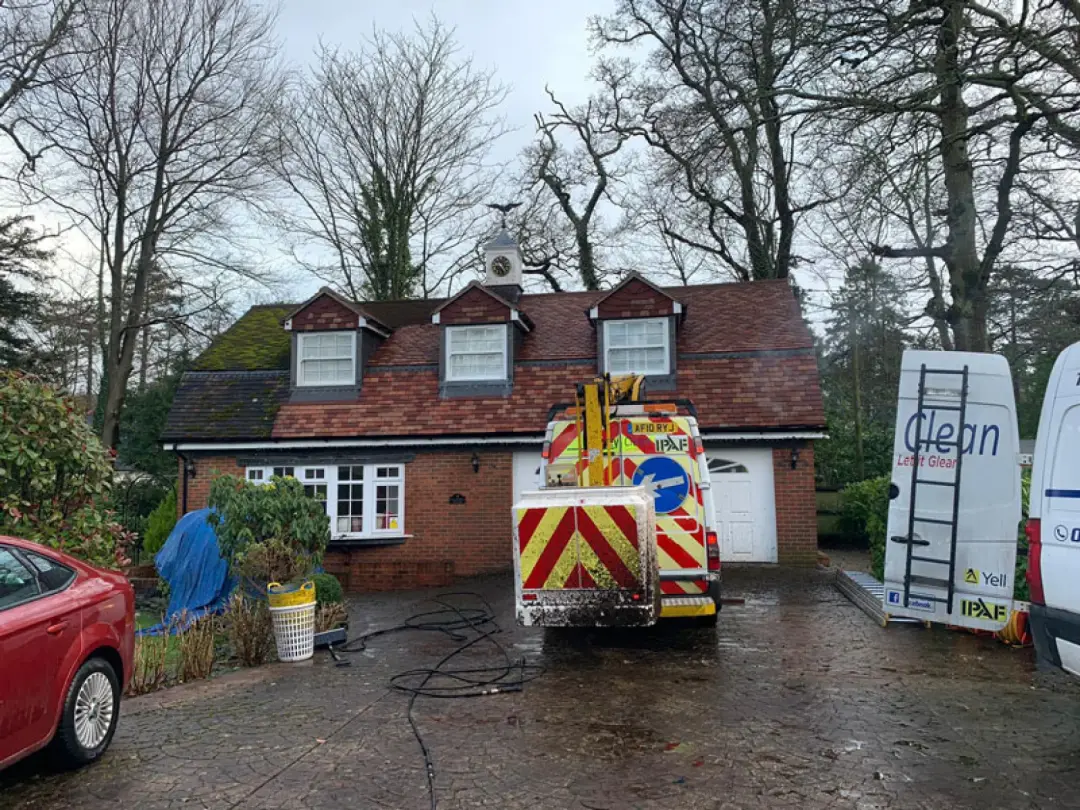
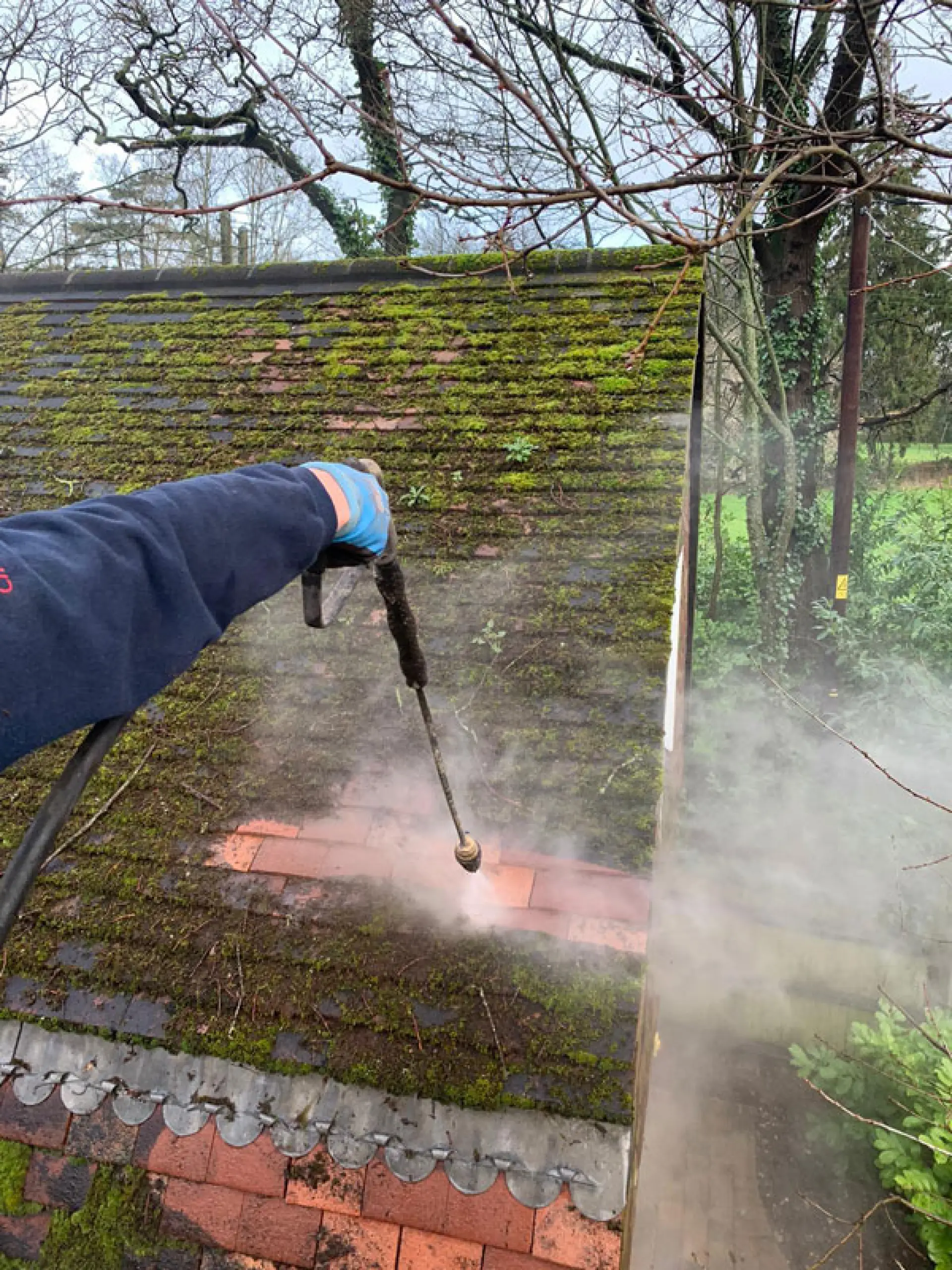
Moss and algae are common on roofs that stay shaded or damp, but removing them safely takes more thought than scraping away the green surface. The roof covering, its age and any existing defects determine the method. Start by identifying the growth and the condition of the roof, then choose an approach that leaves drainage clear and tiles intact.
Tell moss and algae apart
Moss forms a thicker cushion that can trap leaves and detach into gutters. Algae often appears as a thin green or dark film. Lichen can be more firmly attached. A contractor should identify what is actually present rather than applying the same treatment to every discoloured roof. Photographs taken over time can show whether the issue is spreading.
Growth may be concentrated under trees or on a north-facing slope. That pattern helps explain why a neighbour’s roof may need a different approach. Cleaning should be targeted to the surface and the drainage problem, rather than treated as a standard annual task.
Inspect the roof before removing anything
Check from the ground for missing tiles, damaged ridges, loose flashing or gutter overflow. If there is a leak, arrange a roofing inspection before cleaning. Moss may be visible near the problem without being its cause. Working over a damaged covering can make an existing weakness worse.
Historic England guidance for traditional farm buildings says moss can contribute to dampness and deterioration, while failures may also originate in fixings and battens. Its guidance is about traditional buildings, but the distinction is useful: remove growth where appropriate and diagnose defects independently.
Why roof access belongs with specialists
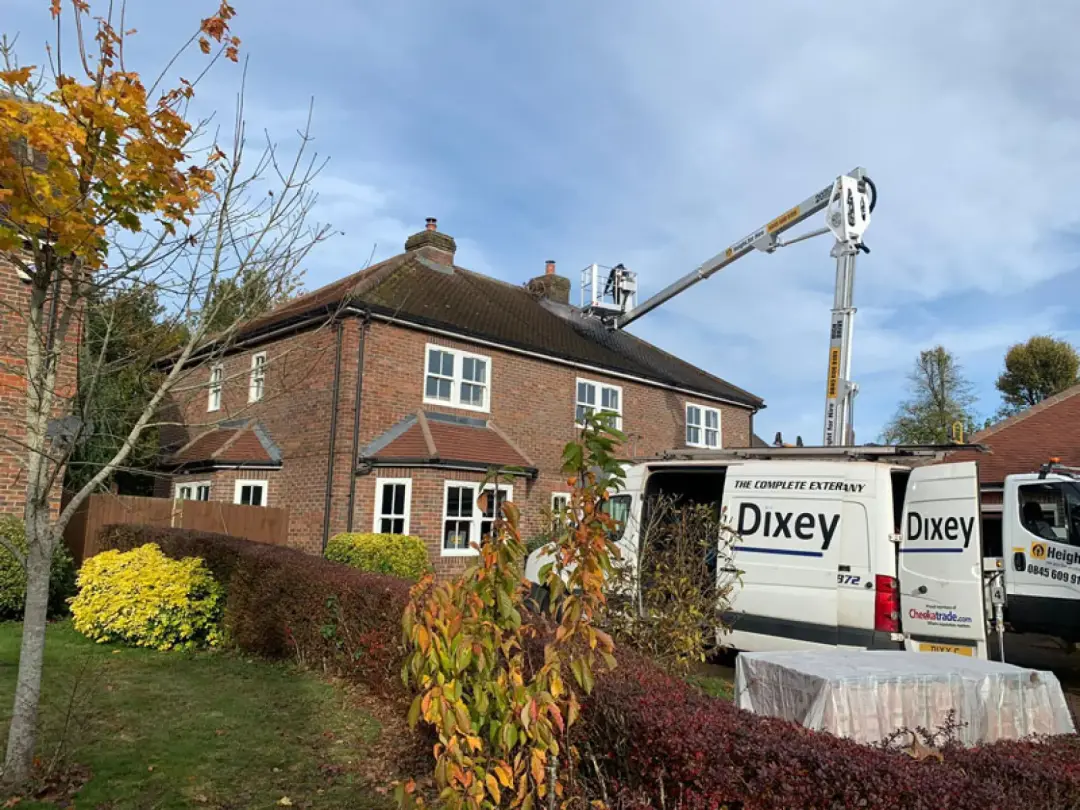
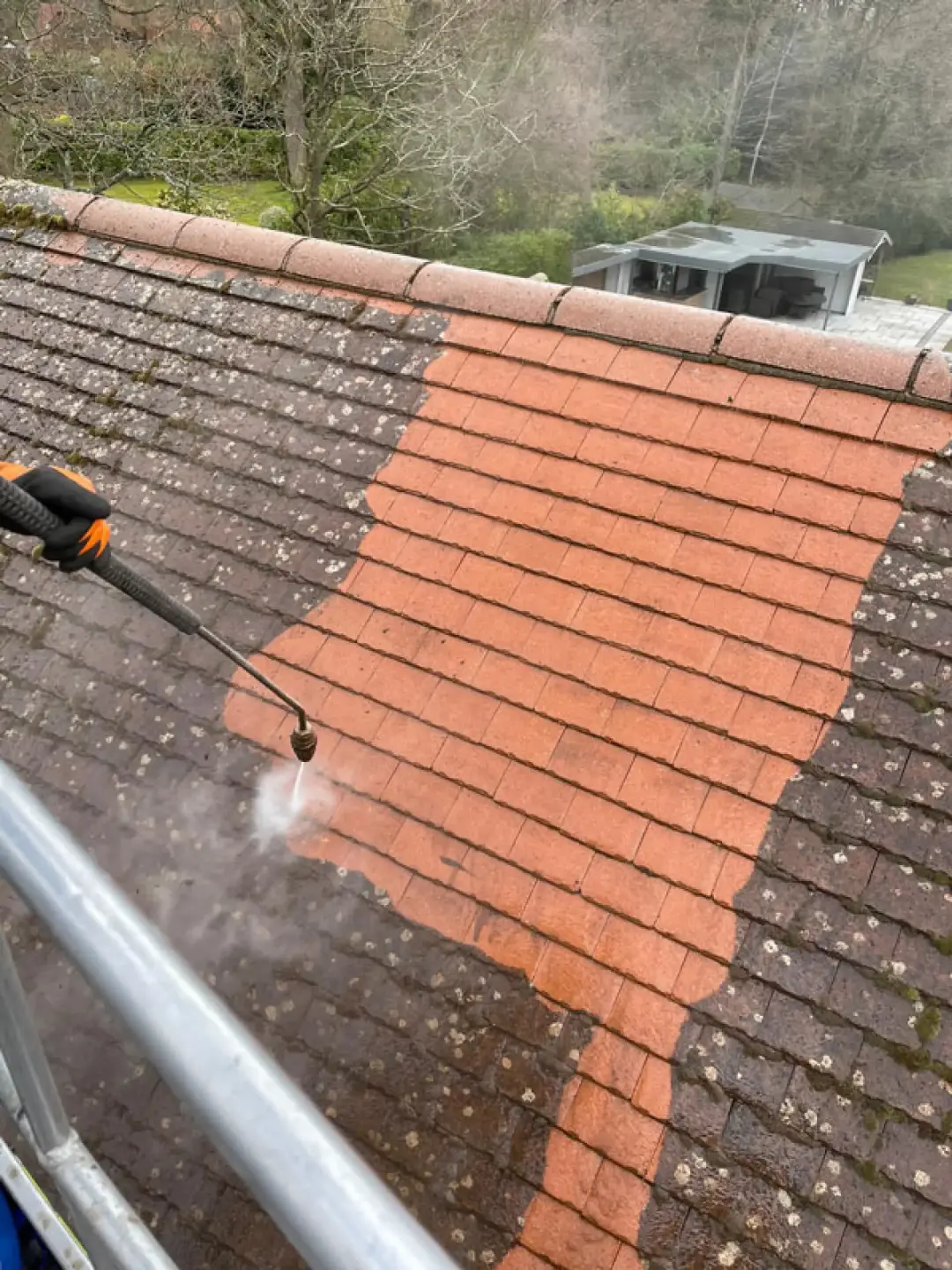
Roof tiles can be slippery even when they look dry, and rooflights may be fragile. The HSE says fragile roofs and rooflights account for 22% of fatal construction falls. Do not walk on a roof to scrape moss or spray algae. A professional can select access equipment and a method that avoids unnecessary loading.
The HSE recorded 31 worker deaths from falls from height in Great Britain in 2025/26. That figure is a reminder to include access and exclusion zones in the job plan. Ask how the contractor will protect people below and whether any area of the roof needs special treatment.
Mechanical removal and careful cleaning
A contractor may use tools suited to the tile profile to lift bulky moss without forcing water beneath the covering. The technique should be gentle enough for the material and should not disturb sound mortar, flashings or ridge details. Old or brittle tiles may call for a more limited approach.
Avoid assuming that high pressure is the fastest safe answer. The person doing the work should explain the pressure or hand method, how they will avoid damaging the surface, and what they will do if a tile breaks. A roof cannot be judged solely by how bright it looks afterwards.
Treatments and regrowth
Some services offer a biocidal treatment after physical removal. Ask for the product, its suitability for the roof material, how nearby plants and drainage will be protected, and what results to expect. Treatment may act gradually and will not correct damaged tiles, broken gutters or poor drainage.
The Met Office reported 1,041.2 mm of UK rainfall in 2025, 90% of average, after a dry spring and wetter later months. Weather changes from season to season, so no contractor can promise a permanent moss-free roof. Monitor regrowth instead of relying on a fixed repeat-treatment date.
Finish by clearing the water route
Dislodged moss must be collected from valleys and gutters, with downpipes checked for blockage. Otherwise the cleaning may simply move a problem from the roof into the drainage system. Ask for photographs of the cleared areas and a note of any repairs found during the visit.
If overhanging branches shade the same section, consider whether sensible tree maintenance could reduce debris. Keep records of the cleaned areas and review them after the next wet season. This makes a future decision about cleaning more informed and can show whether a persistent wet patch needs further investigation.
Discuss your roof with a specialist
If you are unsure whether cleaning is needed, explain what you can see and ask for an assessment that considers the roof covering, safe access and drainage. A clear plan can distinguish cleaning from any repair work. Contact us today for roof cleaning in Aldershot, Hampshire, Berkshire, Surrey and Surrounding Counties.