A roof does not need washing to a rigid calendar. The useful question is whether moss, algae, leaves or blocked drainage are beginning to affect its condition. A roof under trees may need attention sooner than an open, sunny roof of the same age. Regular checks from the ground help you decide when to call a specialist without paying for unnecessary work.
Start with inspection, not a fixed cleaning date
Look at the roof from a safe place in spring and autumn, and again after a significant storm. Check for thick moss along tile overlaps, plants in valleys, overflowing gutters and debris caught behind chimneys. A photograph taken from the same position each time helps you see whether growth is spreading.
A few isolated green patches are not an automatic reason to clean the whole roof. Record what has changed, especially near outlets and flashing. If the roof looks sound but you cannot see a particular slope, ask for an inspection rather than assuming it needs the same treatment as the visible side.
Why the interval differs between homes
Shade, nearby trees, roof pitch, tile texture and the direction a slope faces all affect how quickly growth returns. Porous concrete tiles may behave differently from smooth slate, and a sheltered extension can differ from the main roof. A cleaning recommendation should reflect those details and the condition of the roof covering.
Weather varies too. The Met Office reported 1,041.2 mm of UK rainfall in 2025, 90% of the long-term average, after a notably dry spring and wetter late year. That national figure cannot predict moss on an individual roof. It does show why a one-size-fits-all annual cleaning promise is weak advice.

When cleaning becomes worthwhile
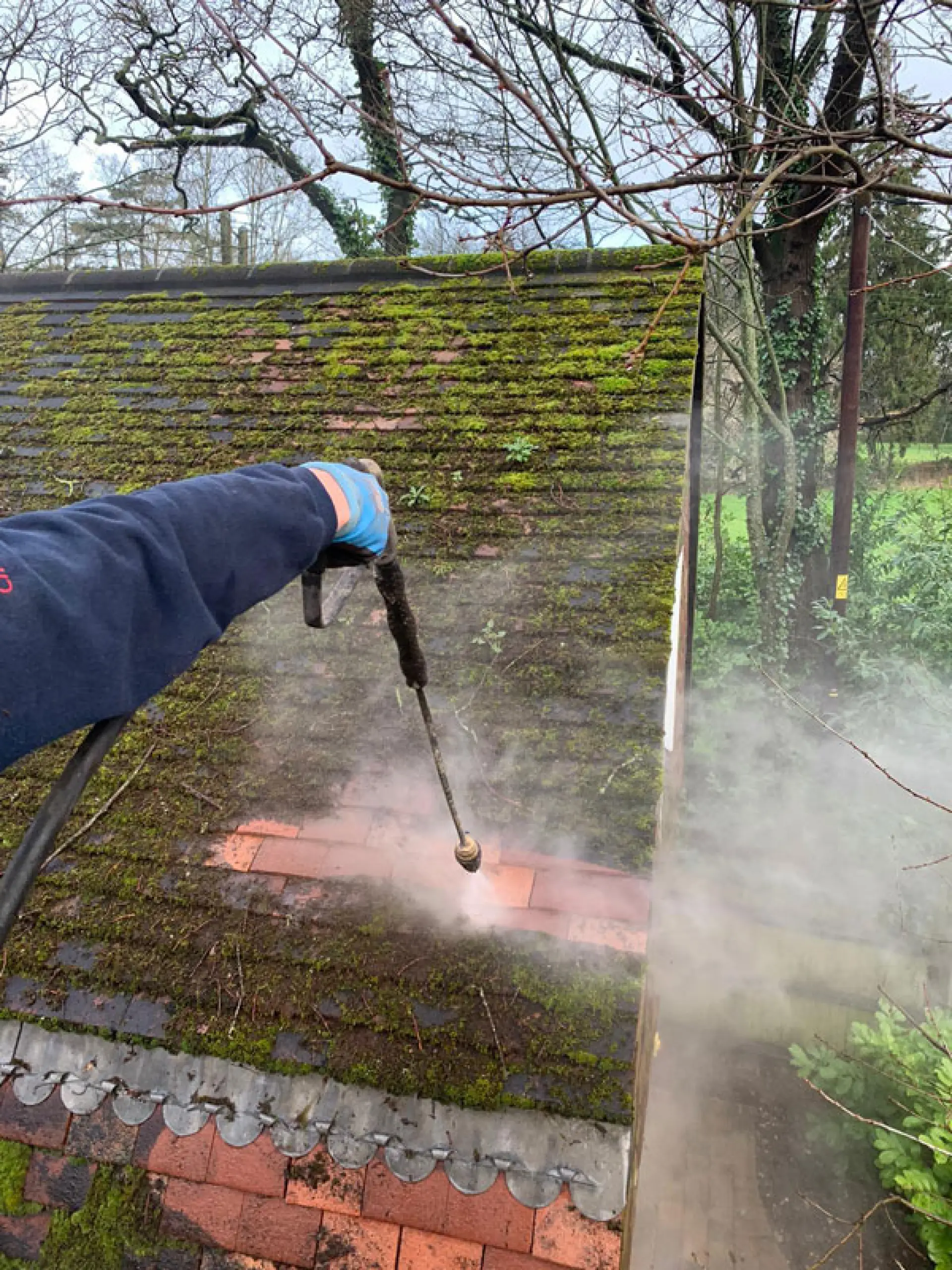
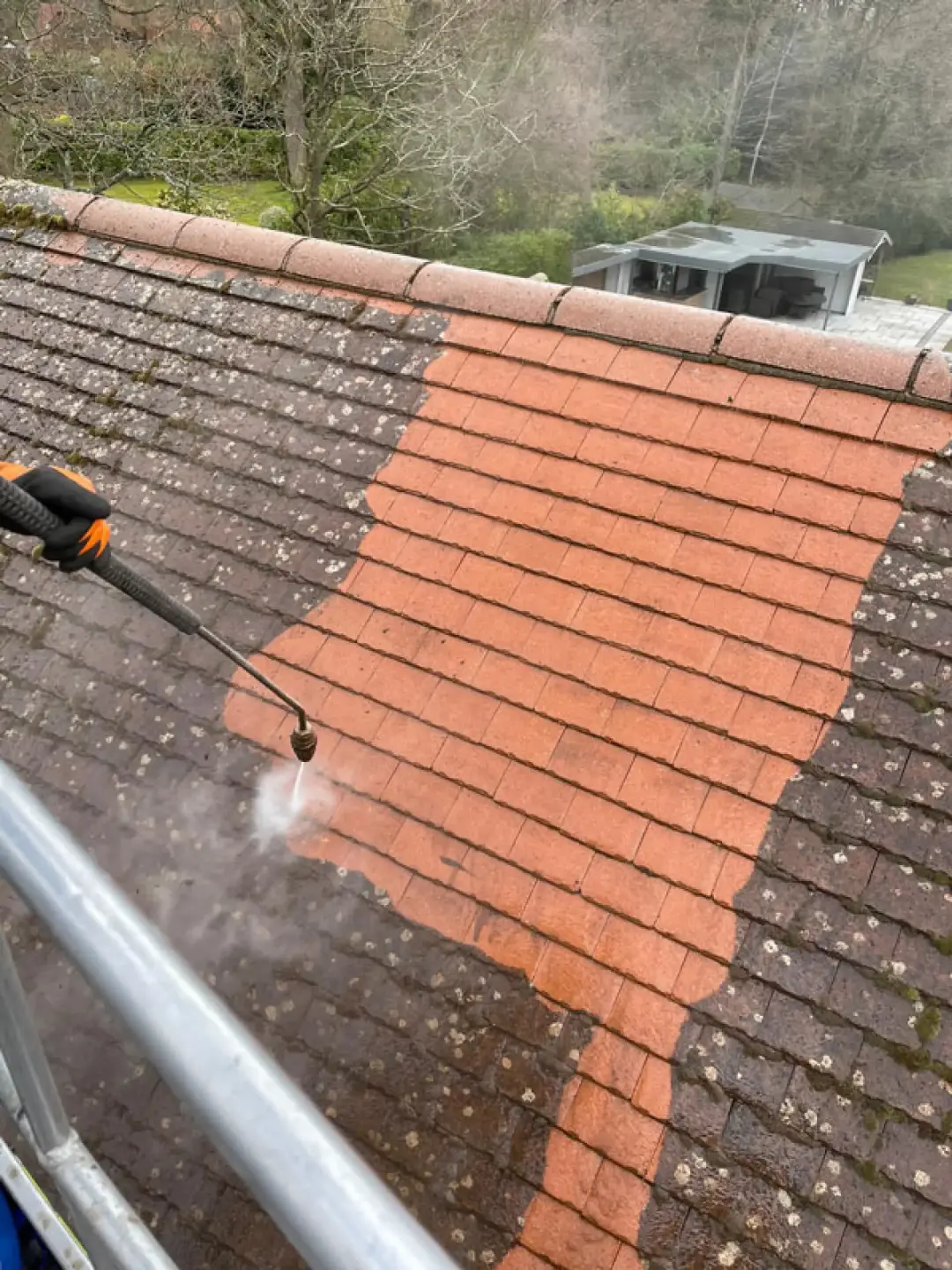
Consider professional cleaning when moss is collecting at tile edges, debris is holding moisture in valleys, or growth is repeatedly washing into gutters. Photos of a roof with heavy patches can help a contractor quote accurately. Ask whether the work includes clearing gutters and checking that water can drain freely afterwards.
If tiles are cracked, slipped or loose, cleaning alone is not the next step. The covering should be assessed and any necessary repairs planned first. Cleaning a damaged roof can expose an existing defect, so a good survey separates maintenance from repairs and explains what is essential.
How often might a cleaned roof need another visit?
There is no defensible universal timetable for full cleaning. Some roofs stay clear for years; others beneath trees need periodic debris removal and closer observation. Agree a review date after the first job based on the roof’s surroundings and the amount of regrowth actually seen, rather than signing up to automatic repeat washing.
A light maintenance visit can be enough where the covering remains clean but gutters or valleys fill with leaves. If a treatment is proposed, ask what it is, whether it suits the roof material, and what the contractor expects it to achieve. No treatment makes a roof permanently maintenance free.
Make safety part of the decision
Even a quick look should stay at ground level or from a safe window. The HSE recorded 31 worker deaths caused by falls from height in Great Britain in 2025/26. Roof access needs competent people, suitable equipment and a method chosen for the building. Do not step onto a roof just to judge whether the moss looks thick enough.
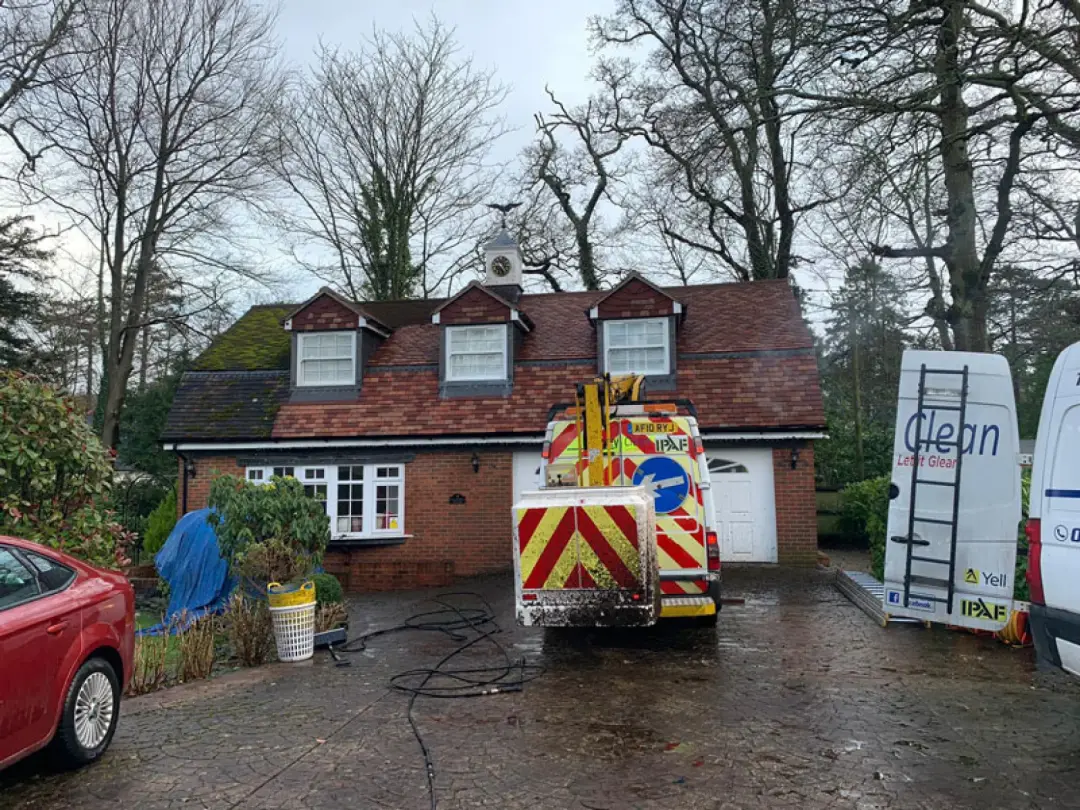
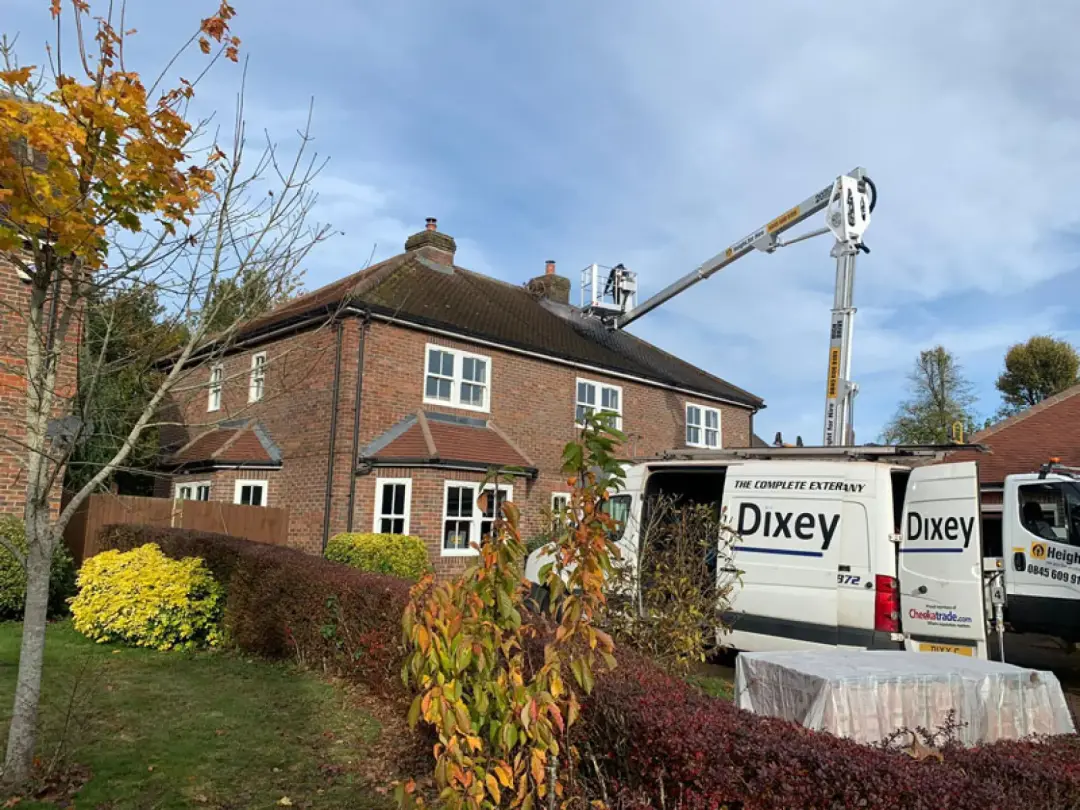
A professional should discuss access, nearby paths and gardens, delicate tiles, rooflights and where the removed material will go. These practical details influence the price as much as the area of roof being cleaned. A quote that ignores access or roof condition deserves a follow-up question.
Choosing the right next step
Ask for a survey if you see a combination of growth, blocked outlets or signs of moisture indoors. Explain when you first noticed the issue and whether it changes after rain. An experienced contractor can then recommend cleaning, a small repair, ongoing monitoring or a roofing inspection.
The sensible frequency is therefore the one supported by what is happening on your roof. Keep a dated photo record, clear rainwater routes as needed, and review any recommendation after the work. That approach protects the roof while avoiding unnecessary disturbance of sound tiles.
Discuss your roof with a specialist
If you are unsure whether cleaning is needed, explain what you can see and ask for an assessment that considers the roof covering, safe access and drainage. A clear plan can distinguish cleaning from any repair work. Call today for roof cleaning in Farnham, Hampshire, Berkshire, Surrey and Surrounding Counties.