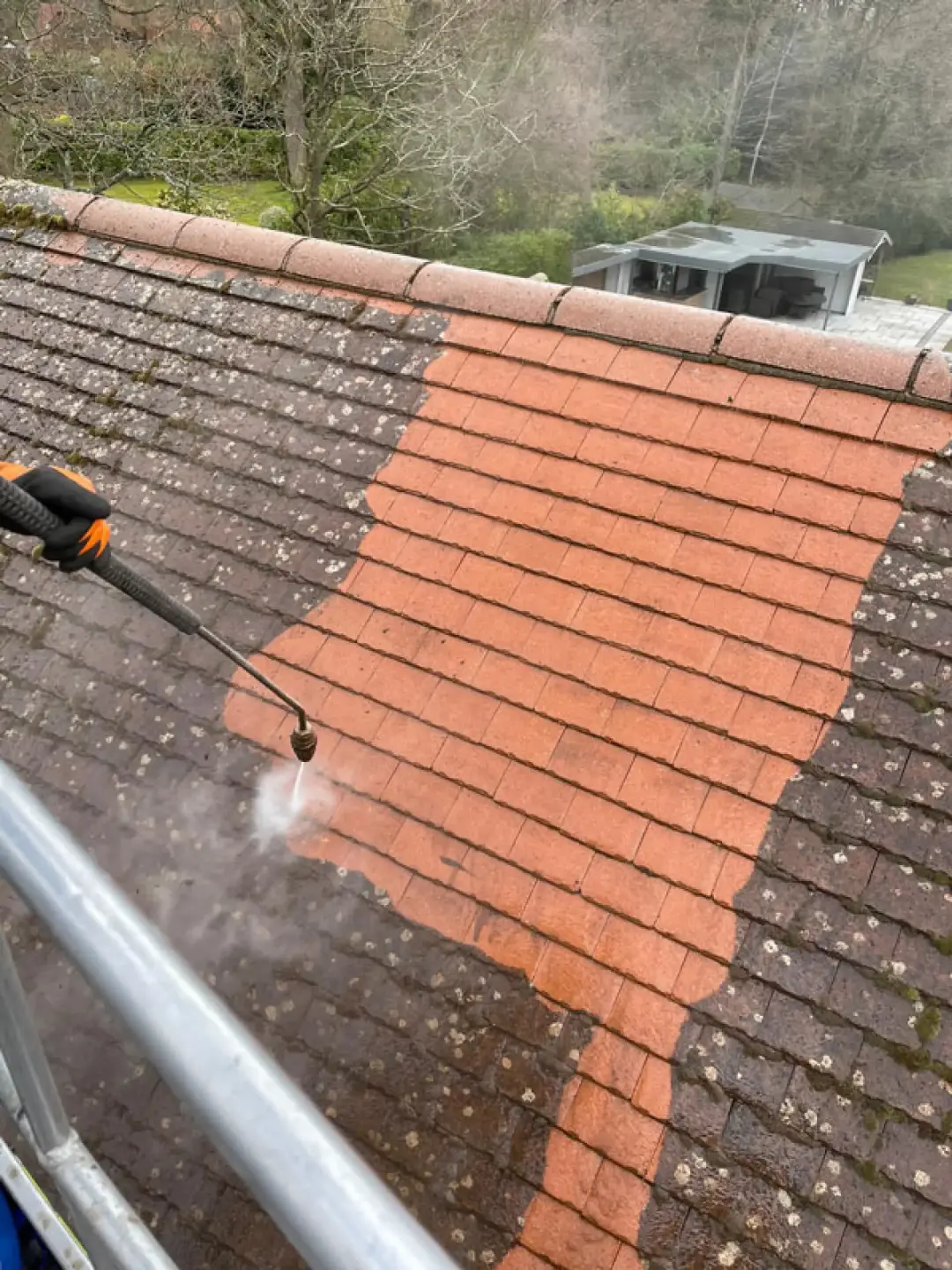
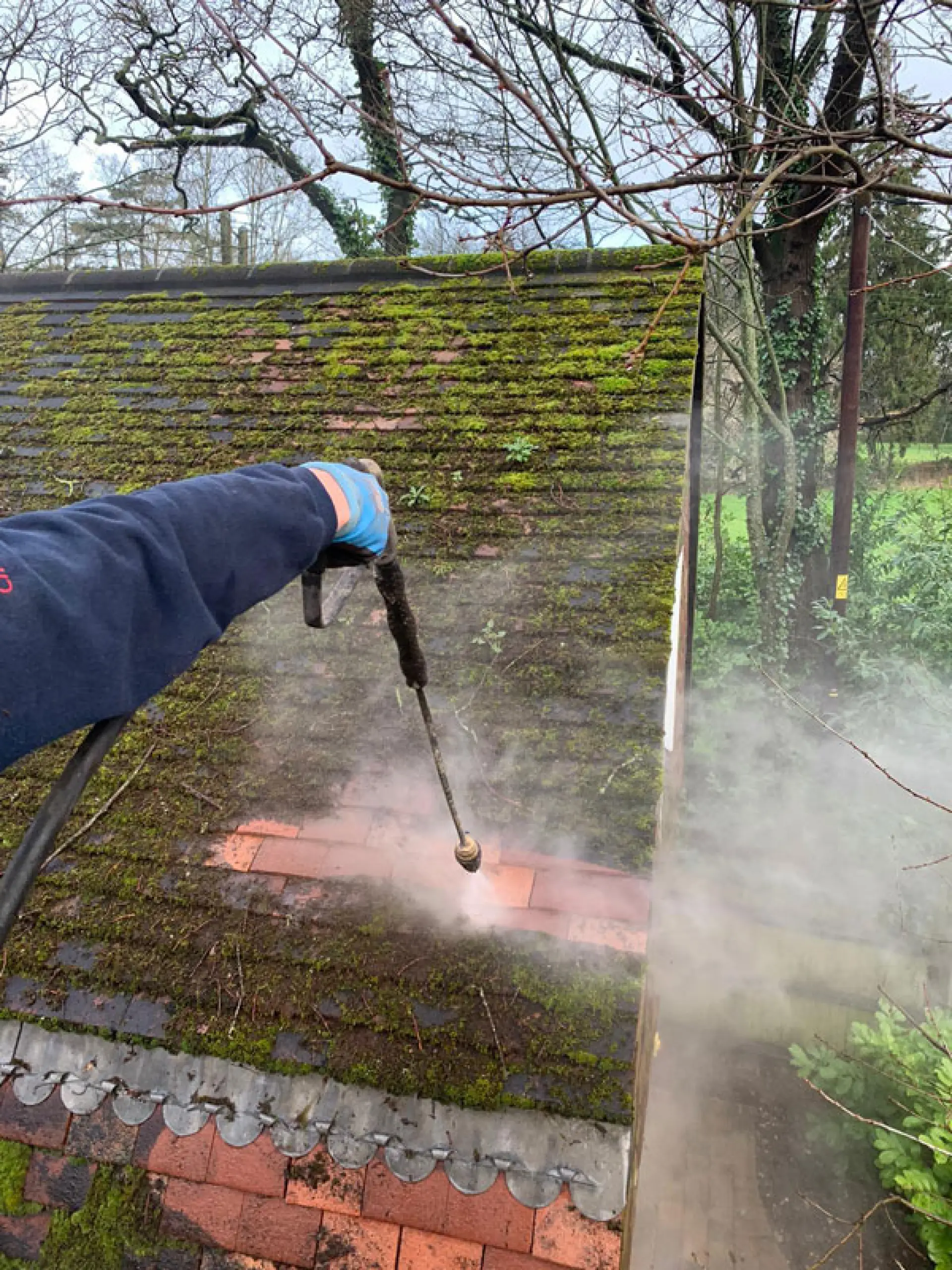
Roof cleaning can help keep water moving along the route the roof was designed to use. It can remove moss and debris from valleys, tile edges and gutters, and it gives a contractor a chance to spot visible defects. It is still maintenance, not a repair for a leaking roof. The cause of a leak needs to be identified before anyone promises a fix.
How debris can contribute to water problems
Leaves and moss can gather where roof slopes meet, behind chimneys or at gutter outlets. When drainage is obstructed, rainwater can pond or run across details that normally stay dry. Clearing the obstruction may reduce that particular risk, especially when the gutters are cleared at the same time.
That does not mean every patch of moss is causing a leak. A roof’s water resistance depends on the covering, overlaps, flashings, fixings and drainage as a whole. If water is already entering, ask for a diagnosis of those elements rather than a cleaning-only quote.
What cleaning cannot repair
Cleaning will not replace a cracked tile, renew failed flashing, mend underlay or fix a blocked internal drain that cannot be reached. A stained ceiling might reflect an old leak, condensation or a current roof defect. The location of an indoor mark may not be directly below the entry point.
Historic England notes in guidance for traditional farm buildings that roof coverings can fail through fixing nails and battens, as well as suffering from moisture-related deterioration. The exact construction varies by home, but the point stands: visible moss should not distract from hidden causes.
Why a clean roof can be easier to inspect
Removing a heavy layer of growth may make broken tiles, loose ridge details or flashing faults easier to see. Ask the cleaning contractor to photograph any concern and explain whether a roofer should inspect it. Discovering a defect is a useful outcome, even when the cleaning itself was not the remedy.
Avoid treating a clean surface as proof that the roof is watertight. The next rainfall may reveal a separate issue. Keep before and after photographs and note any damp patches indoors, including when they appear and whether wind direction seems to matter. This record can help a roofer trace the source.
Weather, drainage and real risk
The Met Office reported 1,041.2 mm of UK rainfall in 2025, 90% of the long-term average. A below-average year still tests roofs repeatedly, and local downpours can matter more than an annual total. This is why drainage checks are worthwhile even when a roof looks generally clean.
Focus on valleys, outlets, abutments and places where water is meant to leave the roof. If a gutter overflows or a downpipe backs up, have that route checked. If the covering is damaged, plan the repair before or alongside cleaning. Good maintenance reduces avoidable risks but cannot eliminate every future leak.
A safe inspection matters more than a quick scrape
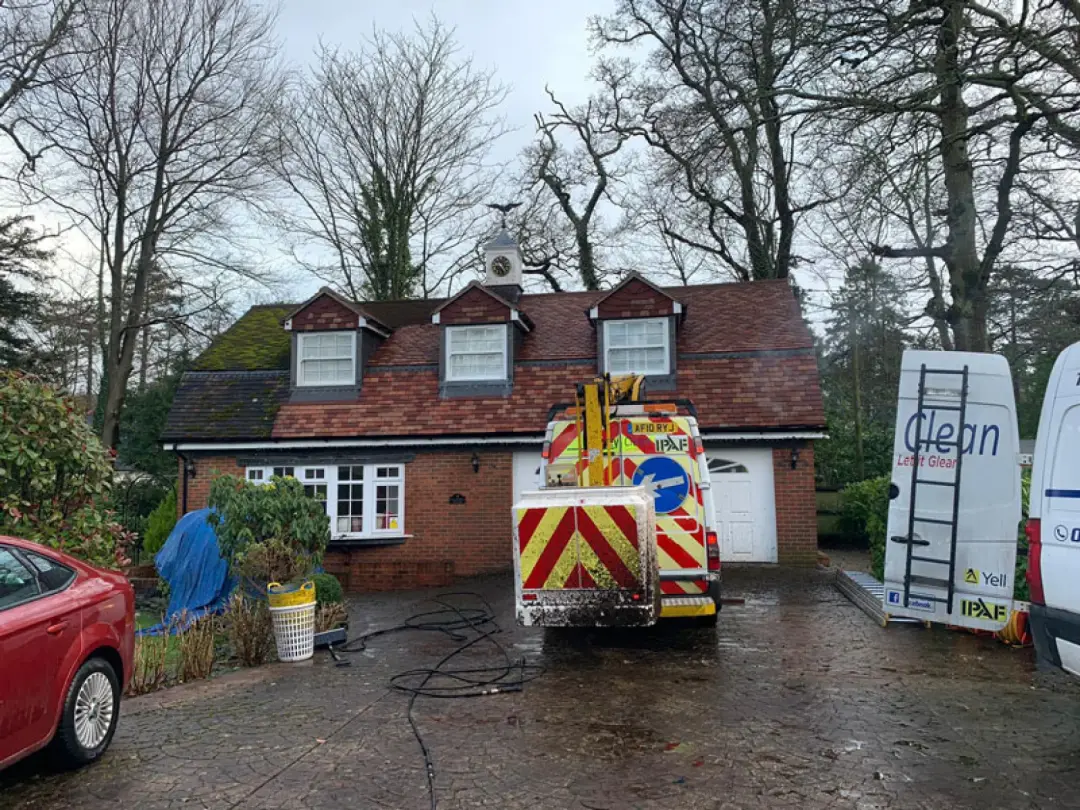
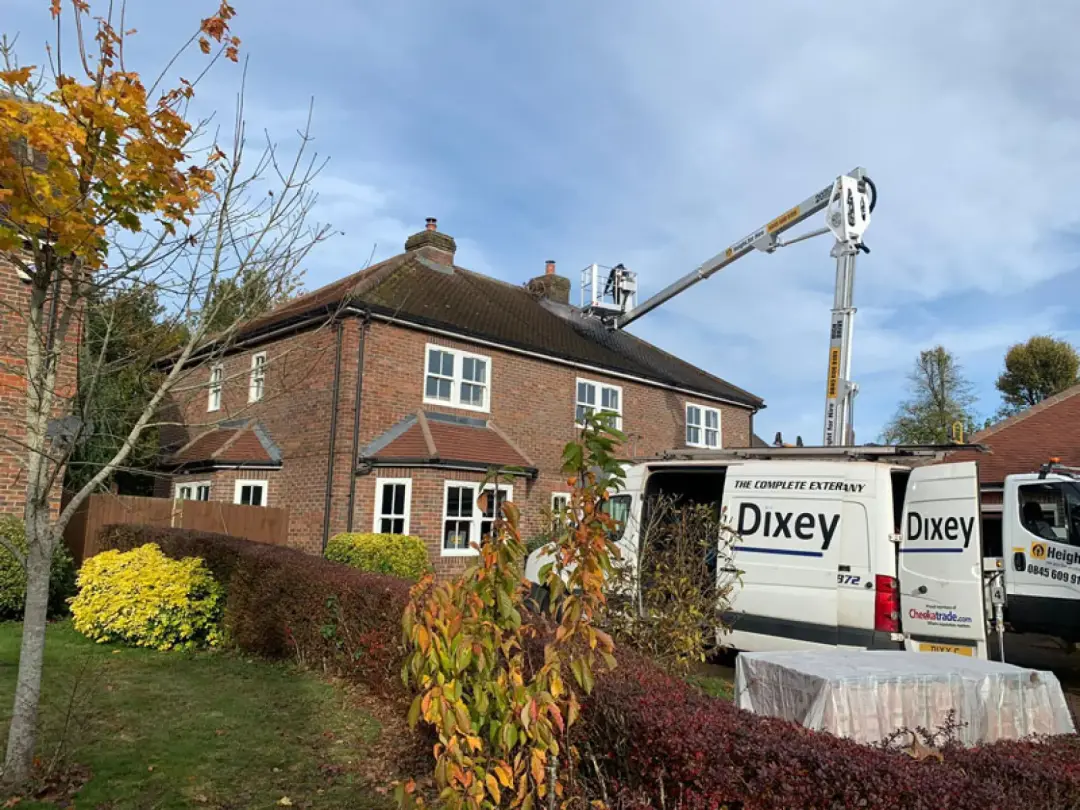
Do not climb onto a wet or mossy roof to search for the source of a leak. The HSE recorded 31 worker deaths from falls from height in Great Britain in 2025/26. A contractor should select suitable access and assess fragile areas before any cleaning or close inspection.
Ask for a clear scope: which surfaces will be cleaned, which drainage routes will be cleared, and what happens if a repair is found. A separate repair quotation avoids confusing the cost of cleaning with the cost of restoring a watertight covering.
When to book cleaning and when to call a roofer
Book cleaning when growth or debris is obstructing drainage or making the roof difficult to assess. Call a roofer promptly if you see a missing tile, active drip, repeated damp mark or failed flashing. Both services may be needed, but their order should follow the findings on site.
The best answer to “will cleaning prevent leaks?” is conditional. It can help manage debris-related water problems and support inspection, while a sound roof still depends on proper materials and repairs. Ask the contractor to explain that distinction in the quote and to document what they find.
Discuss your roof with a specialist
If you are unsure whether cleaning is needed, explain what you can see and ask for an assessment that considers the roof covering, safe access and drainage. A clear plan can distinguish cleaning from any repair work.